Singapore's Ministry of Health introduces three new design requirements for Integrated Shield Plan riders from 1 April 2026 — riders may no longer cover the minimum IP deductible, the annual co-payment cap on panel and pre-authorised claims rises from S$3,000 to S$6,000, and new private hospital riders are projected to be about 30 per cent cheaper on average.
New Requirements for Integrated Shield Plan Riders (MOH IP Rider Requirements (1 April 2026) · WEF 1 April 2026)
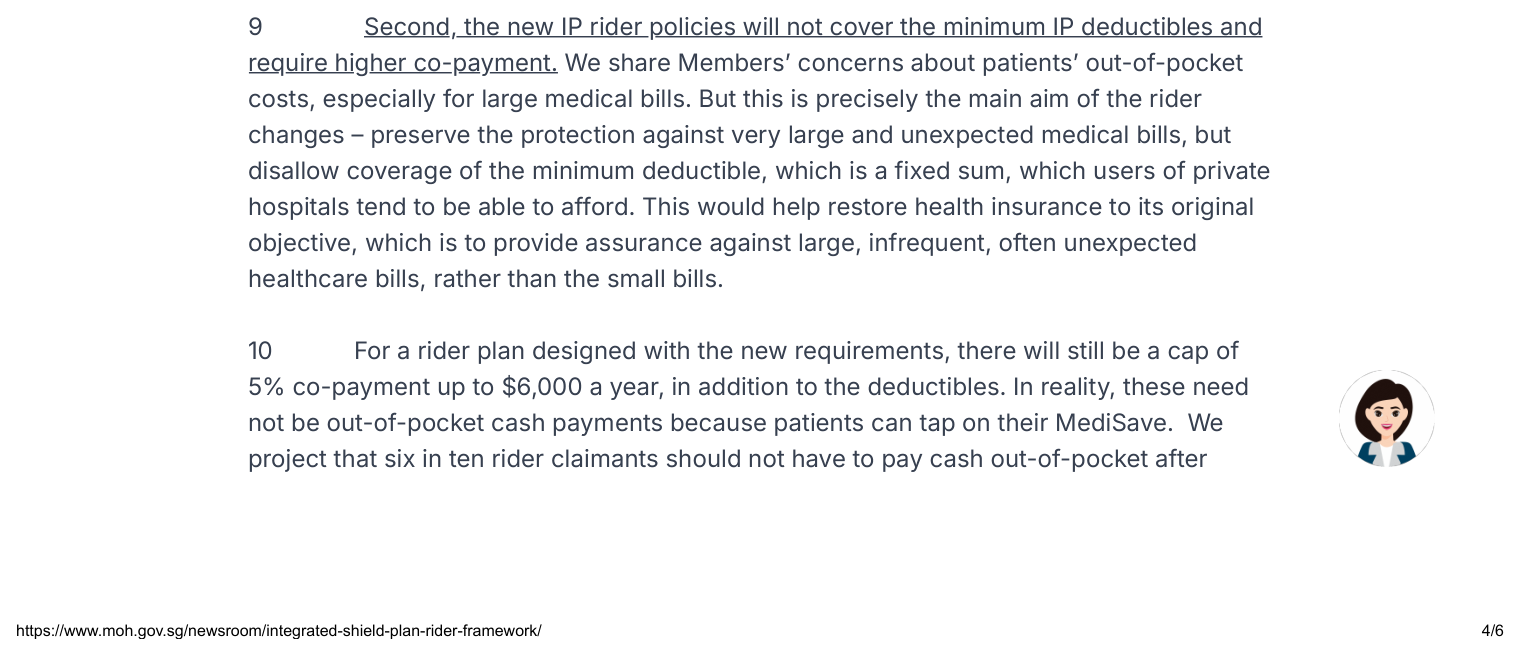
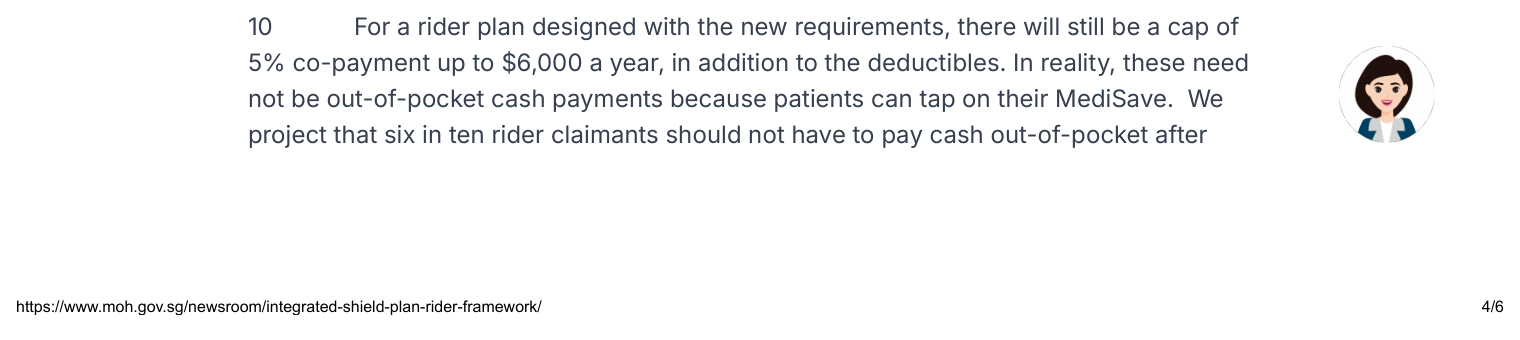
On 26 November 2025, the Ministry of Health (MOH) of Singapore announced new design requirements for Integrated Shield Plan (IP) riders, taking effect on 1 April 2026. From that date, IP riders sold can no longer cover the minimum IP deductible (S$1,500 to S$3,500 per policy year by ward class); the minimum annual co-payment cap on panel and pre-authorised claims rises from S$3,000 to S$6,000; and the minimum 5 per cent co-payment remains unchanged. Premiums for new private hospital riders are projected to fall about 30 per cent on average against existing maximum-coverage riders.
The 2026 design retains the architecture established by the 2018 IP Rider Framework that first introduced the 5 per cent co-payment floor and the S$3,000 cap. The 1 April 2026 step is therefore a recalibration of a seven-year-old framework, not a new instrument.
The regulatory rationale, elaborated in the Coordinating Minister for Social Policies and Minister for Health's parliamentary replies of 12 January 2026, is the cost spiral. MOH data shows private hospital IP policyholders with riders are 1.4 times as likely to make a claim, with average claim sizes 1.4 times those without; over-comprehensive coverage drives over-servicing by providers and over-consumption by patients, which drives bill sizes and premium escalation.
The mechanism is direct. By forbidding rider coverage of the MOH-set minimum IP deductible, the new design re-establishes the patient-facing first-dollar cost meant to instil consumption discipline. The doubled co-payment cap preserves catastrophic-bill protection while exposing more of the routine spend to cost-sharing. MediSave remains usable for both the deductible and co-payment, subject to prevailing withdrawal limits.
The RegLegBrief Specialist Panel considered the MOH press release of 26 November 2025 alongside the 2018 Integrated Shield Plan Rider Framework press release, the 12 January 2026 parliamentary replies addressing six Members' questions on out-of-pocket caps, older-policy retention, public-hospital spillover and the dual-regulation question (MAS solvency versus MOH healthcare outcomes), and the operational "New Integrated Shield Plan (IP) Riders" landing page. Together these documents establish the architecture, the policy commitment, and the parliamentary scrutiny under which the 1 April 2026 commencement proceeds.
Read against the international cohort, the Specialist Panel finds that the Singapore design uses a more interventionist policy lever than most OECD private-health-insurance regimes. Australia's Lifetime Health Cover loading — a 2 per cent premium surcharge per year over age 30, capped at 70 per cent — and the means-tested Australian Government Private Health Insurance Rebate use price signals rather than coverage bans; the Australian Competition and Consumer Commission's Private Health Insurance Report 2024-25 documents the resulting market structure. The OECD's Health at a Glance 2025 records that about twenty per cent of OECD healthcare expenditure is financed through out-of-pocket payments, with co-payment design as a primary cost-containment lever.
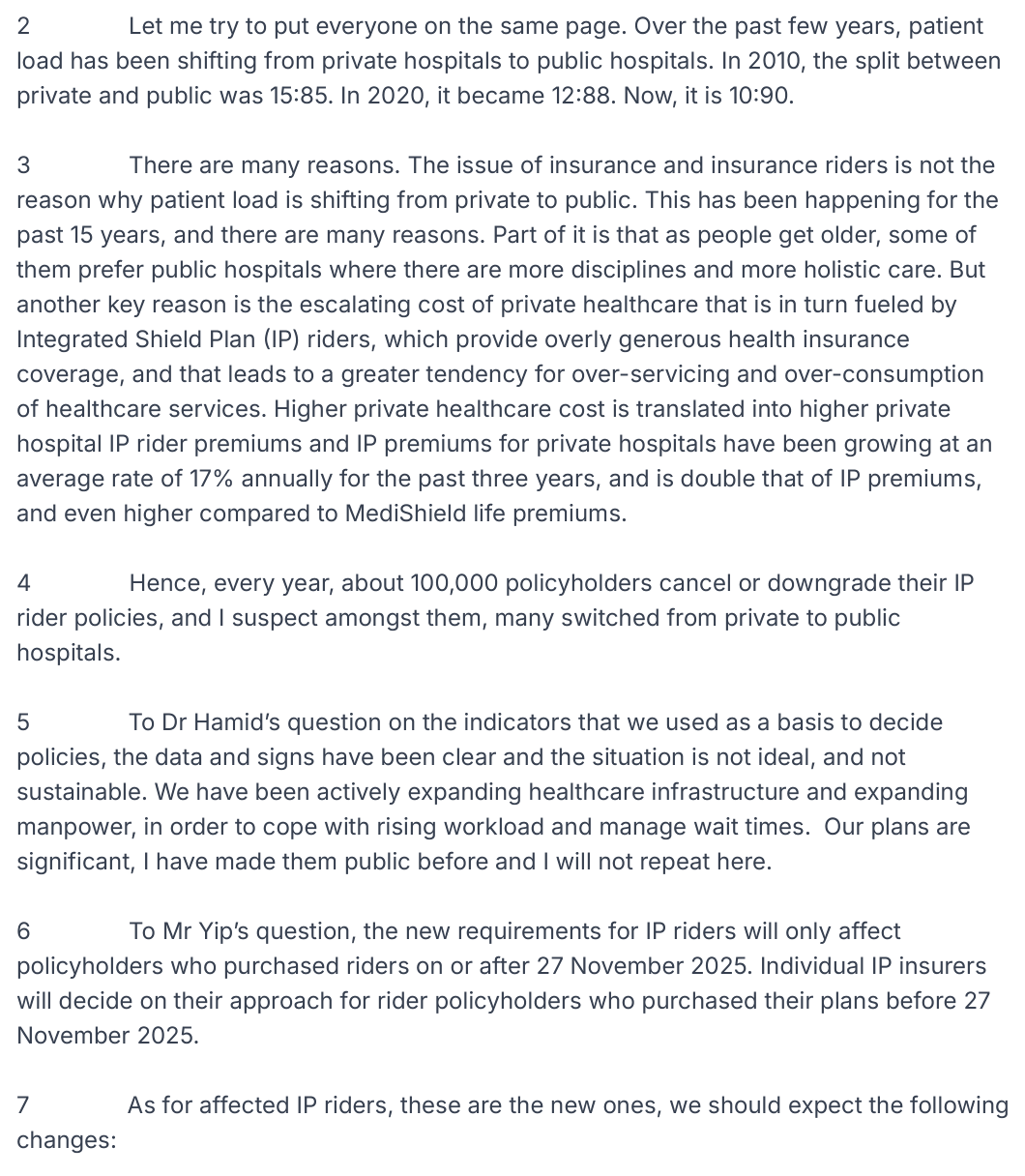
By contrast, the Singapore measure directly bans a coverage feature rather than nudging via tax or premium signals. The Specialist Panel notes that the United Kingdom's Financial Conduct Authority-regulated private medical insurance market — complementary to the National Health Service — operates without a structural cost-sharing mandate of this kind, and that few OECD jurisdictions have legislated against rider coverage of statutory deductibles in this fashion. The relevant passages from the parliamentary reply on the new IP Rider framework are reproduced below as direct snapshots from the source release.
The 1 April 2026 commencement directly engages insurers registered under the Insurance Act 1966 offering Integrated Shield Plans (the seven Integrated Insurers including AIA, Great Eastern, HSBC Life, Income, Prudential, Raffles Health Insurance and Singlife), financial advisers licensed under the Financial Advisers Act 2001 advising on health insurance, compliance officers of MAS-regulated insurance entities, members of the Singapore Actuarial Society advising on IP product design, public accountants registered with the Accounting and Corporate Regulatory Authority signing insurer audit opinions, and Singapore citizens and Singapore permanent residents holding or purchasing IP riders.
The operational delta is precise: insurers must launch compliant new IP riders by 1 April 2026 and cease selling non-compliant riders on the same day. Insurers may continue selling existing riders until 31 March 2026, but new policyholders who purchase such riders on or after 27 November 2025 must be informed that they will transition to a compliant rider no later than their next policy renewal after 1 April 2028.
Second-order consequences may include public-hospital demand pressure as cost-conscious policyholders reconsider private-hospital admission choices, repricing of group medical insurance referencing rider coverage assumptions, and recalibration of insurer panel-doctor agreements where the doubled cap incentivises panel-channelled claims.
The new Integrated Shield Plan rider requirements take effect on 1 April 2026. Existing rider policyholders who purchased before 27 November 2025 remain on contractual terms unless their insurer determines otherwise. Financial advisers should review client portfolios against the new design and document fact-find disclosures referencing the November 2025 announcement and the 1 April 2028 transition deadline. This regulatory development is preserved and cited by RegLegBrief at reglegbrief.com/cite/RLB-SG-2026-00053.